
Fever: Causes, symptoms and treatment
"It's nothing but a fever." A fever is generally a sign that your body is fighting off some kind of infection and typically goes away as soon as the source of the infection has been dealt with. However, if you have a very high or lingering fever, or if it is accompanied by other serious symptoms, you should call your doctor.


On this page
Learning about what causes fevers, how to treat at home, and what symptoms to look out for can help you decide whether your it needs medical care.
Common Causes
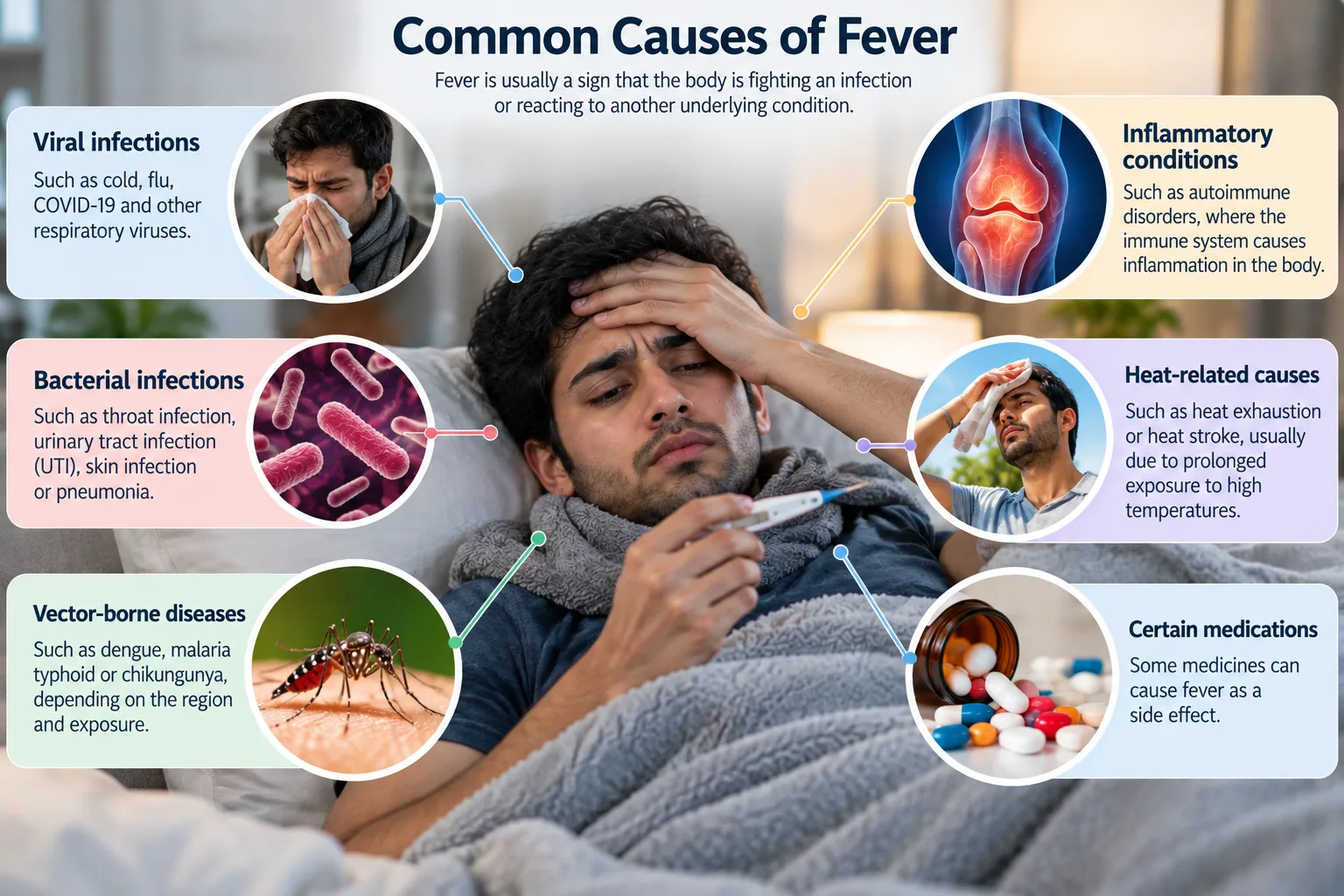
It can occur due to multiple factors; hence, it cannot be diagnosed based on thermometer readings only.
Infection-related Causes
A viral infection such as a cold, flu, or any other viral illness can bring along a fever associated with fatigue, myalgia, cough, sore throat, or nasal congestion. A bacterial infection may also be a reason for fever, for example, a urinary tract infection or bacterial pneumonia.
The crucial point is to remember that antibiotics are not indicated in the case of viral infections, and the decision to prescribe them should depend on the presumptive diagnosis made by a medical professional.
Other possible causes
Infections are common, but they can't be the only reason for a high fever.
Exposure to extreme heat can cause heat-related illness, including heatstroke. Unlike an ordinary fever, heatstroke is a medical emergency, particularly when accompanied by confusion, collapse or altered consciousness. Inflammation and some immune-related conditions can also cause fever, while certain vaccines may cause a temporary rise in temperature.
That is why two people with the same temperature can be given completely differing treatment.
Symptoms to watch for
The accompanying symptoms of a fever can often tell us more than the actual reading on the thermometer. For example, a fever that includes a cough and a sore throat might indicate a chest infection. A fever with vomiting or diarrhoea is a sign of concern about dehydration. A fever accompanied by a rash, severe headache, extreme tiredness or breathing difficulties may require urgent medical assessment.
Rather than focussing only on the temperature, we should be paying attention to the other symptoms present.
Managing symptoms at Home
Most of the ordinary fevers can be treated by providing supportive care while the illness runs its course.
Staying hydrated
Fever can cause people to become dehydrated, especially if they are sweating profusely, vomiting, or having diarrhea. This may make them feel weak, dizzy, thirsty, or unusually tired
Water is often the best option, and it's often best to take it in small amounts and frequent doses. In the case of vomiting or diarrhea, an oral rehydration solution may be necessary to replenish fluids, salts, and electrolytes that have been lost in the process
It's important not to push too much liquid at once; a slow, steady stream will help keep most people hydrated for the longest period of time.
Rest and symptom relief
A person with a fever may feel cold and then that they are too hot. It might be tempting to swaddle them in several blankets when the chills begin, but layers of heavy clothing can trap the heat. Loose, comfortable clothing and a room at a comfortable temperature are usually sufficient. Rest is also important since the body is currently preoccupied with battling the cause of the fever. Strenuous activity will have to wait.
When managing a high fever (opens in a new tab)at home, the priority is to relieve discomfort safely, maintain hydration and monitor for warning signs rather than trying to bring the temperature down to normal immediately.
Paracetamol or ibuprofen may provide relief from fever-associated discomfort if they are indicated for the patient and used in accordance with the recommended instructions. Some people, including persons with certain medical problems, may need to avoid specific medications, so professional guidance is necessary in such cases.
When to see a doctor
In adults, a fever that stays at or rises above 103°F (39.4°C), persists or is accompanied by worsening symptoms warrants medical advice. A baby younger than three months with a temperature of 100.4°F (38°C) or higher needs immediate medical assessment, even if the baby appears otherwise well. Serious warning signs, such as difficulty breathing, confusion, a seizure or difficulty waking, require emergency care regardless of the temperature.
Warning signs that need medical attention
Sometimes the other symptoms accompanying the fever are more important than the temperature itself.
Seek immediate medical attention if the person develops:
- A severe or persistent headache or stiff neck
- Confusion, unusual behaviour or difficulty waking
- Difficulty breathing
- A seizure
- A purple or bluish rash that does not fade when pressed
- Repeated vomiting or an inability to keep fluids down
- Severe abdominal pain
- Signs of severe dehydration or unusual weakness
Medical advice is also needed if the fever persists, keeps returning, worsens or occurs in someone with a weakened immune system or another condition that increases the risk of complications.

What to do as the fever Improves
A falling temperature is a good sign, but there's always the risk that it's not permanent. After all, some people find that they still feel tired, weak or a little achy even when that fever's gone. Resting and drinking lots of liquids can help here, as can resuming normal activities.
But it's also important to keep track of what happens next, so that if the situation changes you know what to do. When did the fever start? What was its peak temperature? What symptoms did you have to start with? Did anything seem to help or hurt your condition?
If you need to see a doctor, this information will be invaluable to them. On the other hand, if your fever just refuses to stay gone or new symptoms develop as you recover, that should also require a visit to the hospital rather than trying to manage it at home again.
How YourDoc can help
When fever symptoms require assistance, YourDoc’s (opens in a new tab)AI healthcare assistant Jivika can collect text, voice or image data and ask clarifying questions about the user’s symptoms.
Depending on the case, the next steps may involve advice for self-care, review by a doctor or a recommendation to seek urgent care.
It is important to note that Jivika cannot replace proper medical care. If someone is experiencing life-threatening symptoms, such as shortness of breath, confusion or being unable to wake up, they need to get immediate medical attention.
The takeaway
Fever is a symptom, not a diagnosis. Home care consists of rest, fluids, and close monitoring. More serious conditions such as difficulty breathing, confusion or seizures, severe dehydration, or other serious symptoms require emergency care.
The main point is that the measurement itself is not as important as the context and the symptoms that may be related.
Topics
Related reading

Nosebleed: Causes, First aid and Warning signs
A nosebleed can occur at any time whilst at work, on the move or even when blowing your nose due to a cold. Many will automatically lean their head back or insert a piece of tissue into their nose. However, this may cause more problems. Most nose bleeds are caused by slight irritation and can be treated at home. Knowing what to do when you have a nosebleed and what not to do will help you stop the bleeding safely.
Paracetamol guide: Uses, overdose risks and precautions
Most of us have taken paracetamol at some point, whether for a headache, fever or those annoying body aches that make even a normal day feel exhausting. It's a familiar medicine, often kept in the home and used without much thought. But even a common medicine needs a little care. Taking too much paracetamol or accidentally combining it with another medicine containing the same ingredient can cause serious liver damage.

What to do if someone faints: First aid guide
Imagine you are in a queue, sitting at work or chatting to a friend when, suddenly, the person next to you turns white and faints. For a few seconds, everyone starts panicking. Someone gets a bottle of water out. But those first few seconds after someone faints can be critical and a composed, simple response can prevent the victim from sustaining a second injury and, crucially, can determine if there is something more serious going on.
CBC Blood Test: What do your results mean?
You receive your blood test results. Suddenly there are lots of medical terms. You have Hb, RBC, WBC, MCV and platelets. Along with some of these you will have H’s and L’s next to numbers which can cause you to worry. The complete blood count (CBC) is a routine blood test used to determine the levels of various blood cells in your body. This can give doctors information about anaemias, infections and bleeding disorders.
This article is for general information. It is not a diagnosis or a substitute for a doctor’s advice. In an emergency call 112 or 108.