
Nosebleed: Causes, First aid and Warning signs
A nosebleed can occur at any time whilst at work, on the move or even when blowing your nose due to a cold. Many will automatically lean their head back or insert a piece of tissue into their nose. However, this may cause more problems. Most nose bleeds are caused by slight irritation and can be treated at home. Knowing what to do when you have a nosebleed and what not to do will help you stop the bleeding safely.


On this page
1. Stop tilting your head back
Doing this will let the blood run down your throat rather than stopping the bleeding. Swallowing blood can make you feel sick, cause you to cough or be sick.
Instead:
- Sit up and lean forwards.
- Breathe through your mouth.
- Spit any blood out of your mouth.
- Do NOT lie down or tilt your head back.
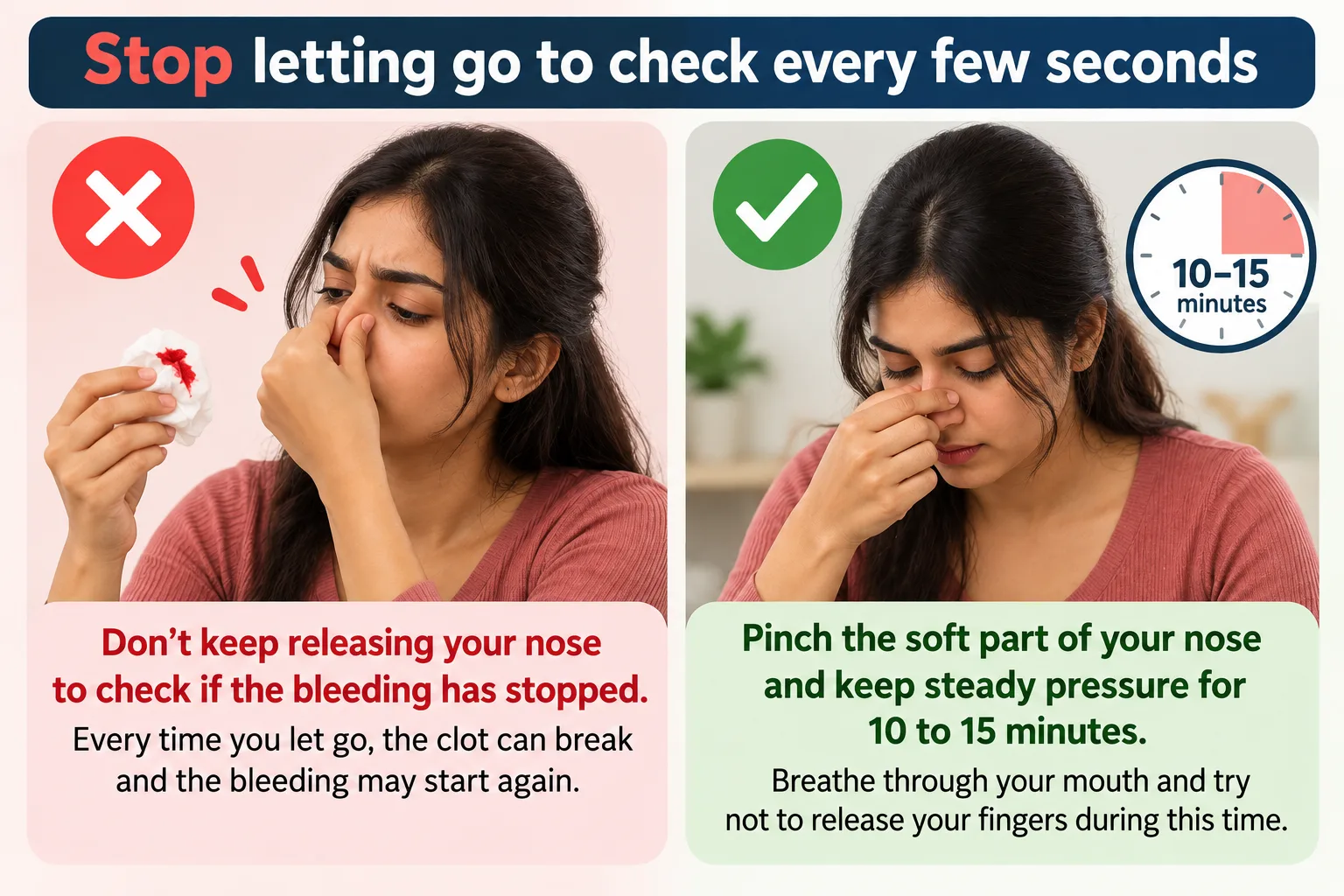
2. Stop checking too soon
Continuously checking if your nose has stopped bleeding can cause the blood clot to be disturbed.
Instead:
- Sit up and lean forward.
- Press the fleshy part of your nose just above your nostrils.
- Apply constant pressure for 10-15 mins.
- Use a timer so you know how long you have been applying pressure.
If the bleeding doesn’t stop after 15 mins of firm pressure then get urgent medical help.
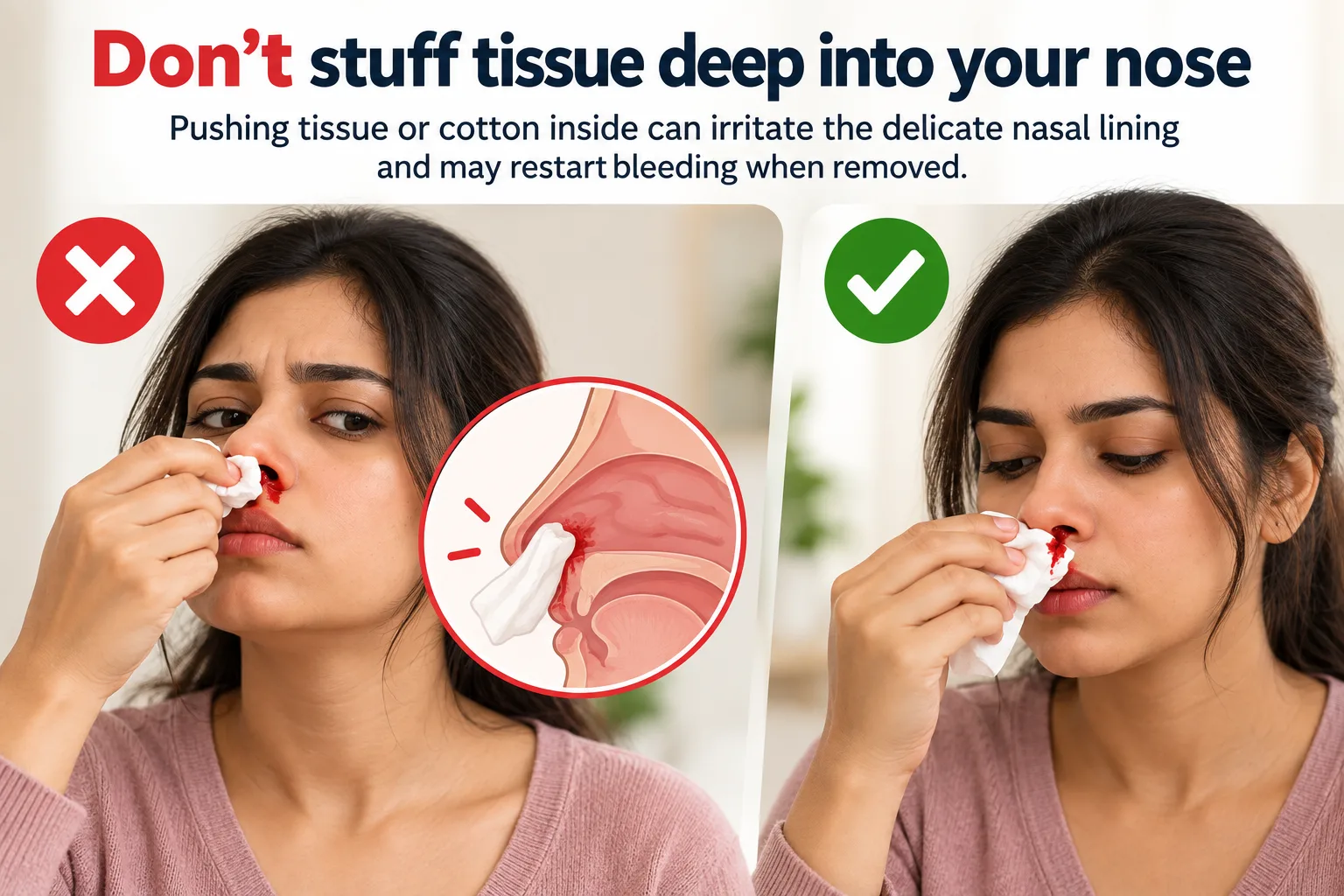
3. Stop stuffing your nose
Tissues can absorb the drops of blood but if inserted too far up your nose they can cause irritation. This can cause the nosebleed to start again if the blood clot is disturbed when removing the tissues or cotton wool.
Instead:
- Place a tissue outside the nose.
- Apply pressure to the soft part of your nose.
- Do not insert anything into your nostrils.
- Leave the clot to settle once the bleeding has stopped.
4. What causes Nosebleeds?
Inside your nose there are fragile capillaries (blood vessels) that can bleed if they are irritated or injured.
Common causes of nosebleeds:
- Dry air irritating the inside of the nose
- Picking or rubbing the nose
- Blowing your nose hard
- Colds, allergies or frequent sneezing
- Injuries to the nose
- Some medications such as anticoagulants (blood thinners)
Occasionally having a nosebleed is not usually a cause for concern. If you have regular nosebleeds that do not seem to have an obvious cause then you should see a doctor.
5. What to avoid after a Nosebleed
After bleeding has stopped, there is usually some settling time required before resuming strenuous activity to prevent re-bleeding.
Avoid for next 24 hours:
- Blowing your nose.
- Lifting heavy objects and doing strenuous exercise.
- Taking hot showers and very hot drinks straight after your nose bleeds.
- Removing any clots that you can see.
If you tend to get recurrent nose bleeds due to dryness, using a nasal saline spray and/or a nasal lubricating gel may help. Using a humidifier will also help if the air inside is dry.
6. Ignoring warning signs
Most nose bleeds are minor. However, you should seek urgent medical assistance if:
- There is a lot of blood loss or the bleeding does not stop after pressing firmly on the nose for 15-20 minutes.
- Having trouble breathing.
- Feeling dizzy, weak or fainting.
- The nose bleed was caused by a severe head or facial injury.
- Swallowed a large quantity of blood and became sick.
- You are on anticoagulant medication and the bleeding is difficult to control.
If you have a known bleeding disorder, you should seek medical advice if the bleeding is difficult to control.
7. Why do Nosebleeds keep coming back?
Sometimes frequent nosebleeds can be an indicator of more than dry air. They could be caused by irritation in the nasal area, allergies, medication or an underlying medical issue.
If you are experiencing recurring nosebleeds, unexplained nosebleeds or other unusual bleeds then book an appointment with your doctor.

Need help? Jivika can guide
If you know what to do, it can be easier to deal with, however, sometimes you can feel unsure if the bleeding doesn’t stop or other symptoms occur.
YourDoc’s AI healthcare assistant Jivika can help you understand your symptoms, ask the right questions and direct you to the right medical treatment. If you need a doctor's assessment, you may opt for face to face consulting with a verified doctor on YourDoc who can help you figure out what to do next.
Remember: Lean forward, pinch the soft part of your nose continuously and don’t move the clot. Seek medical attention straight away if it is heavy bleeding or doesn’t stop.
References
- Nosebleed (opens in a new tab). (National Health Service, UK)
- Nosebleed (Epistaxis) (opens in a new tab). Howard E. LeWine, MD, Chief Medical Editor, Harvard Health Publishing
Topics
Related reading

Fever: Causes, symptoms and treatment
"It's nothing but a fever." A fever is generally a sign that your body is fighting off some kind of infection and typically goes away as soon as the source of the infection has been dealt with. However, if you have a very high or lingering fever, or if it is accompanied by other serious symptoms, you should call your doctor.
Paracetamol guide: Uses, overdose risks and precautions
Most of us have taken paracetamol at some point, whether for a headache, fever or those annoying body aches that make even a normal day feel exhausting. It's a familiar medicine, often kept in the home and used without much thought. But even a common medicine needs a little care. Taking too much paracetamol or accidentally combining it with another medicine containing the same ingredient can cause serious liver damage.

What to do if someone faints: First aid guide
Imagine you are in a queue, sitting at work or chatting to a friend when, suddenly, the person next to you turns white and faints. For a few seconds, everyone starts panicking. Someone gets a bottle of water out. But those first few seconds after someone faints can be critical and a composed, simple response can prevent the victim from sustaining a second injury and, crucially, can determine if there is something more serious going on.
CBC Blood Test: What do your results mean?
You receive your blood test results. Suddenly there are lots of medical terms. You have Hb, RBC, WBC, MCV and platelets. Along with some of these you will have H’s and L’s next to numbers which can cause you to worry. The complete blood count (CBC) is a routine blood test used to determine the levels of various blood cells in your body. This can give doctors information about anaemias, infections and bleeding disorders.
This article is for general information. It is not a diagnosis or a substitute for a doctor’s advice. In an emergency call 112 or 108.